Three Tastemakers Take Us Inside the World of Luxury Wine Glassware
In wine, the vessel matters. In the 18th century, as winemaking became more scientific and wine appreciation more refined, glassmakers in Europe began shaping vessels to complement specific wine types. The rise of crystal houses like Riedel (founded in 1756), Baccarat (founded in 1764 via a commission by Louis XV) and later the glassware house Lalique (founded in 1888) helped transform wine service into a sensory art.
Image Courtesy of Alexander Rubin
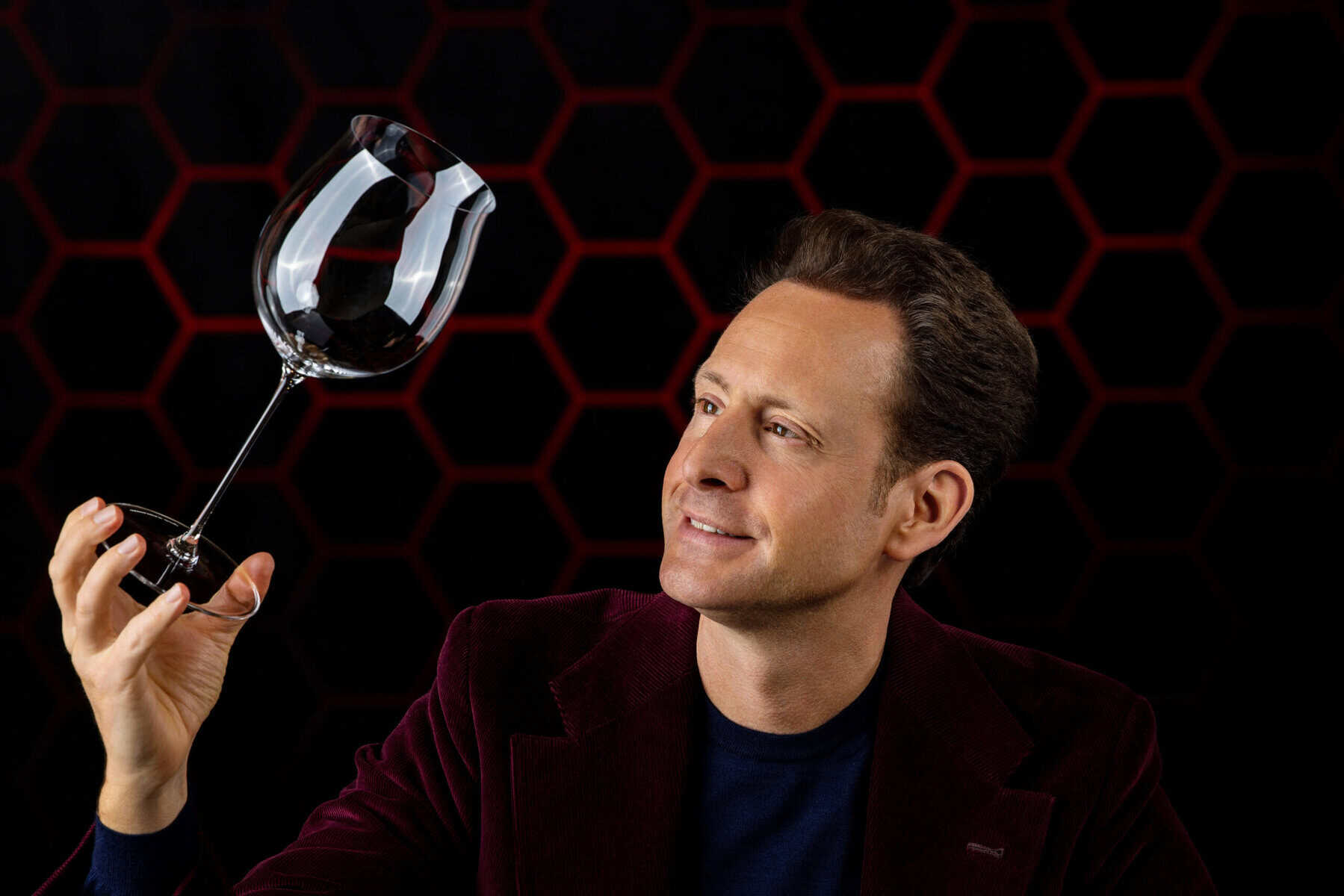
The evolution of wine glasses shows that a glass is never just a glass, not when it’s shaped by the heritage of Riedel, the precision of Lalique, or the drama of Baccarat. Three tastemakers—Maximilian Riedel, Jean-Charles Boisset, and James Suckling—lead that evolution, each through bold collaborations that merge centuries-old craftsmanship with modern sensibility. From Baccarat’s sculptural showpieces to Lalique’s featherweight crystal and Riedel’s high-performance forms, these visionaries are reshaping how we see—and sip—wine. We spoke with all three to explore the intersection of wine, design, and the sensory experience.
Jean-Charles Boisset × Baccarat
“Wine is the ultimate expression of the senses and art of living. It requires the most refined vessels to present itself.” Boisset says. “It’s about beauty. Energy. Expansion.”
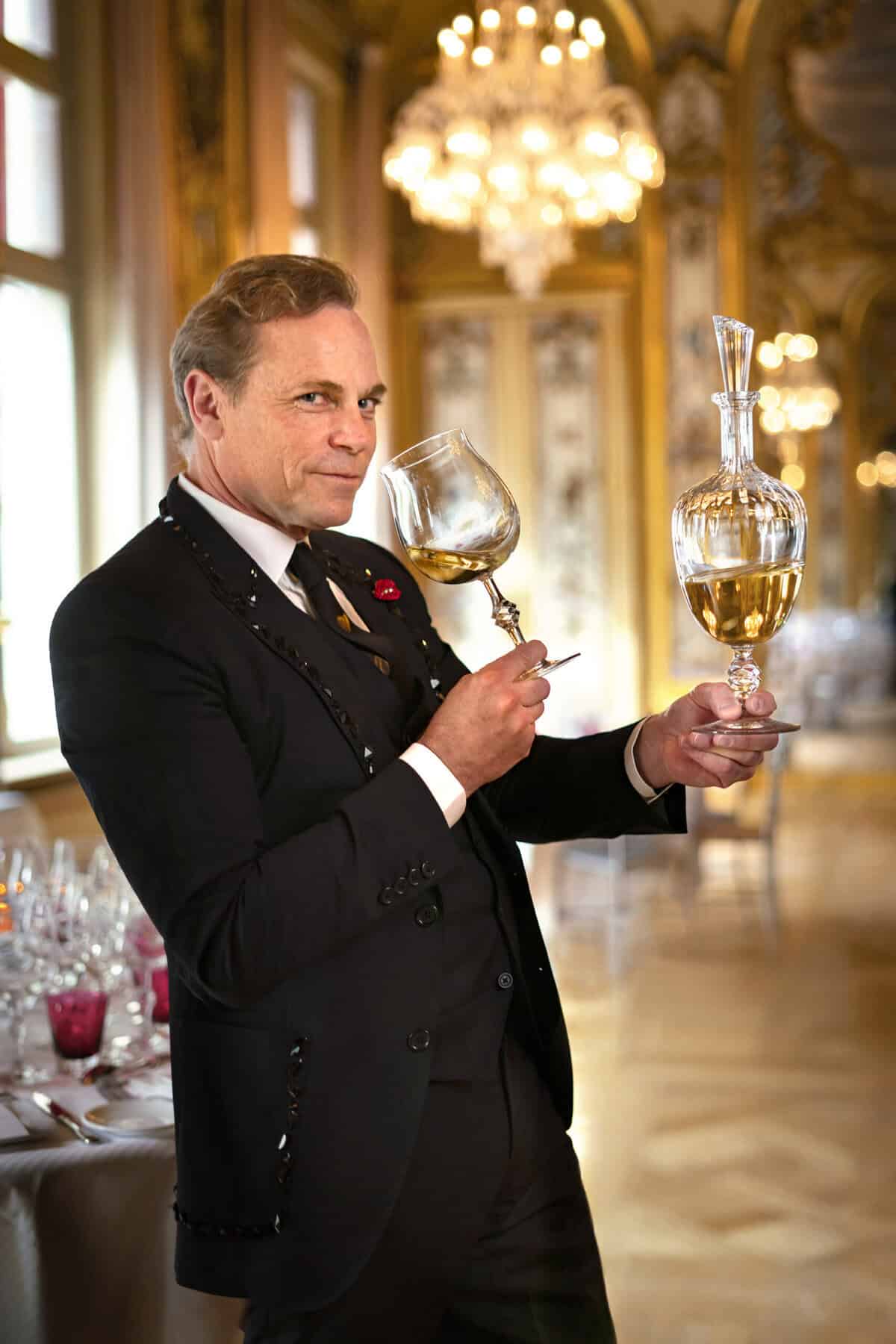
Boisset with Baccarat glasses. Photo credit: Laurent Parrault, courtesy of The Boisset Collection
If Riedel is a scientist, Boisset is a showman. The French American vintner, who presides over a transatlantic empire of wineries including Raymond Vineyards in Napa and Domaine de la Vougeraie in Burgundy, lives for the dramatic moment. He blends wine with fashion, fragrance, and fantasy, turning the tasting room into a stage and the wine glass into a jewel.
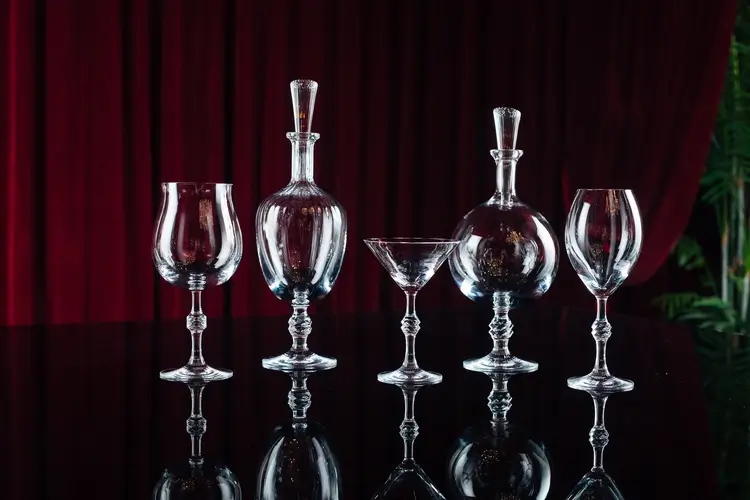
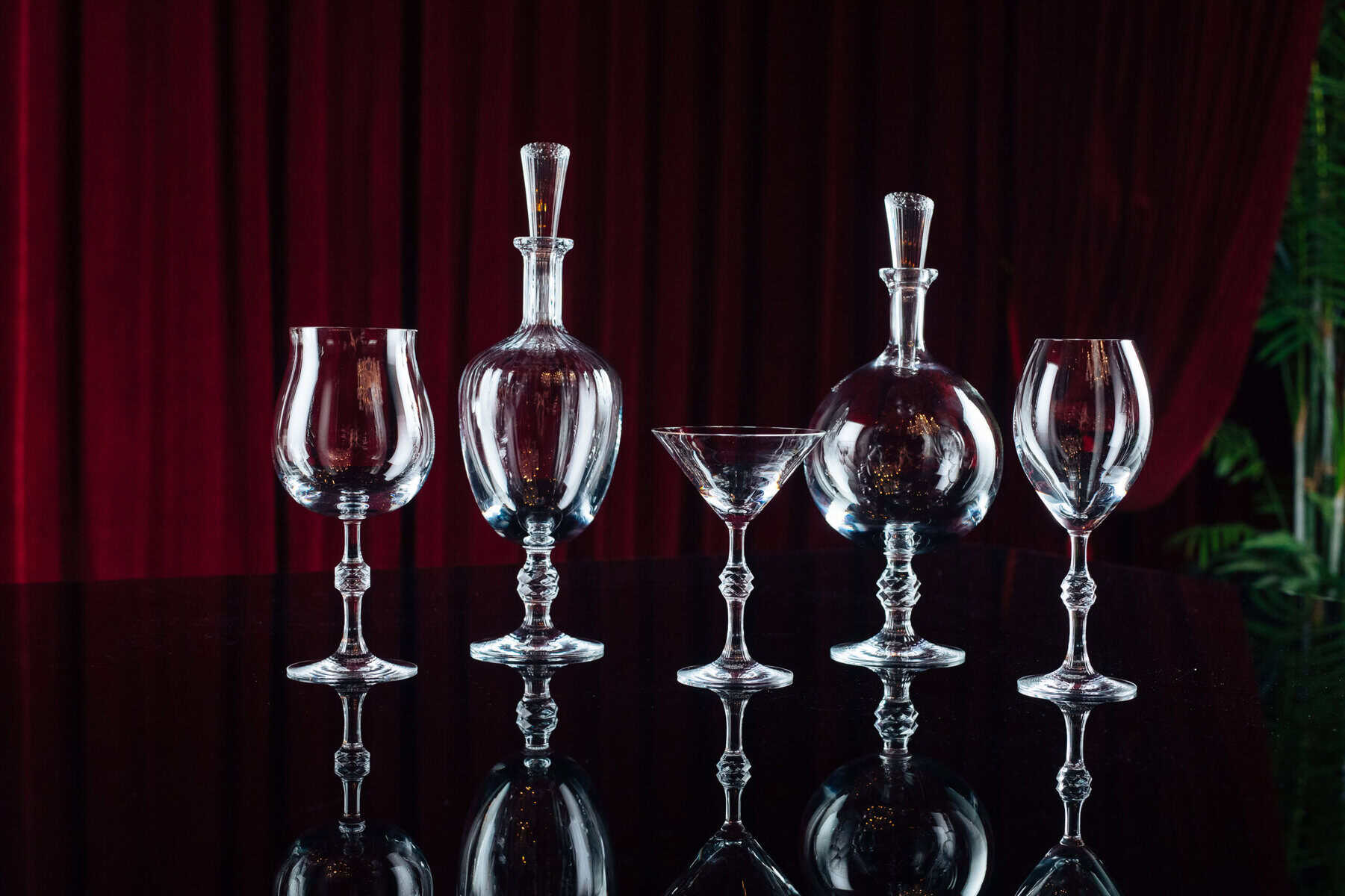
With Boisset, the French crystal maison brought a vintner’s designs to life for the first time in its 255-year history. It created The Passion Collection, which includes a wine glass designed for white, red, or rosé, a Champagne glass, and wine and Champagne decanters.
Boisset’s collaboration with the legendary French crystal house Baccarat—crafting glassware for royalty since 1764—is as opulent as the man himself. The Passion Collection features sculptural decanters, starburst-cut stemware, and a distinctive diamond motif inspired by “the gems that grow on the vine.” His goal? To elevate the act of drinking wine.
That spirit of boldness and glamour infuses every facet of the collection. The Passion line blurs the boundary between utility and art, with a weighty crystal that sparkles like stage lighting. Each piece features the signature diamond shape at the stem’s core.
Baccarat has long symbolized prestige, rooted in the grandeur of 18th-century France. But in Boisset’s hands, the crystal becomes a theatrical companion to Grand Cru Burgundy or Napa Cabernet. The Passion Decanter alone is a showstopper: dramatic in silhouette, designed to aerate with elegance and built to pour with charisma—each piece hand-blown, hand-cut, and crafted from pure Baccarat crystal.
“The glass provides the perfect aromatic expression, th
Alchemy of the Senses by Baccarat and Boisset, photo credit: Alexander Rubin
e perfect lip opening to guide the wine and the perfect direction to hit the palate, allowing the wine to grow expansive in the mouth, bringing balance and coating your palate beautifully. Rarely does a wine glass achieve all of this.”
Passion Collection by Baccarat × Jean-Charles Boisset
Best experienced at: The Crystal Cellar at Raymond Vineyards—a theatrical tasting lounge bathed in Baccarat brilliance
Signature piece: Starburst Passion Decanter—inspired by cosmic energy, designed for showstopping pours
James Suckling × Lalique
“One hundred points is the rating I give an incredible wine. A perfect wine. The Universal Glass Marc Larminaux and I designed was perfection for me,” he explains. “So, we named it 100 POINTS.”
James Suckling with Lalique, photo courtesy of James Suckling
Few have shaped modern wine culture as decisively as James Suckling. A former Senior Editor and European Bureau Chief and longtime global critic, Suckling is known for his elegant palate and experience with thousands of the world’s most renowned wines.
In his collaboration with Lalique, the storied French crystal house (originally a jewelry house), founded by René Lalique, he turns his attention from the vineyard to the vessel. Together, they created the 100 POINTS Collection, handcrafted glasses engineered for functionality and beauty. Sleek and feather-light, the stemware marries Suckling’s precision with Lalique’s artistry.
Each glass is blown in Alsace and shaped to coax the finest expressions from top wines. It’s the kind of subtle luxury that whispers rather than shouts. The result? A tactile experience that elevates even a single pour into an act of reverence.
Suckling’s 13-year collaboration with Lalique now includes crystal glasses designed for Burgundy, Bordeaux, Champagne, and Cognac, as well as water glasses, shot glasses, tumblers, decanters, and cork holders. But his favorite remains his original Universal Glass.
100 POINTS by Lalique × James Suckling
Available at: Lalique boutiques worldwide, Lalique.com
Best experienced at: James Suckling wine events in Hong Kong, Bangkok or Napa
Signature piece: Universal Wine Glass—feather-light with a frosted Lalique base, designed for purity and balance
Maximilian Riedel × Riedel
“Sometimes, people don’t like a wine and blame the wrong reasons,” Riedel says. “Temperature is a good reason, but they never blame the glass. People should know that the wrong glass can negatively impact your wine experience.”
As the 11th-generation CEO of Austria’s Riedel Crystal, Maximilian Riedel was born into a nearly 300-year-old legacy—one that reshaped the wine world by introducing varietal-specific stemware in the 20th century. His family didn’t just make glasses; they pioneered the idea that each wine deserves a vessel tailored to its structure, aroma and expression.
Riedel is known for hosting dynamic sensory workshops that reveal how the same wine can taste dramatically different depending on the glass—clumsy in one, sublime in another. His Performance Collection, with its optical lines and precision-tuned bowls, is now a go-to for top sommeliers and collectors alike. For Riedel, the goal is harmony.
Images Courtesy of Riedel
His father, Georg Josef Riedel, developed the concept of varietal-specific wine glasses. Georg collaborated with industry icons like Robert Mondavi and Angelo Gaja who “taught him that the most important factor in winemaking is the fruit, the grape variety. So he studied fruit and grape varieties, and he realized that you could communicate a sense of them so much better if you start developing glasses that bring forward the finesse of every grape,” Maximilian said.
In Riedel’s hands, centuries of tradition serve a modern mission: to enhance the voice of wine, not overshadow it. His glassware is about more than aesthetics—it’s about elevating expression through balance, clarity and intent.
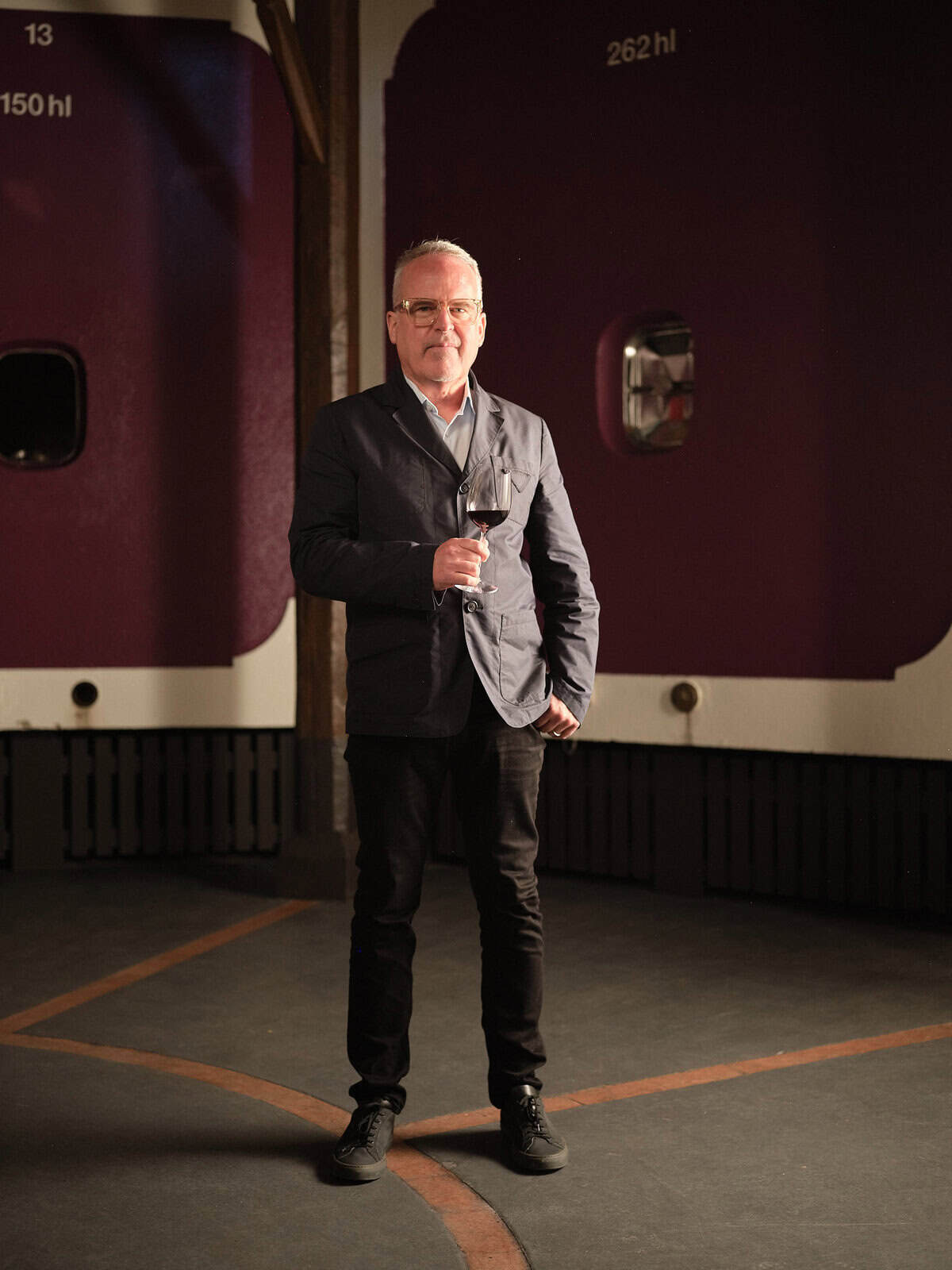
Max Riedel with the Superleggero Glass. Photo credit: Riedel
Varietal-Specific Glassware by Riedel
Available at:Riedel.com, luxury wine retailers and select global wineries
Best experienced at: Riedel Sensory Workshops led by Maximilian Riedel or in high-end tasting rooms
Signature piece: Riedel Performance Collection—precision-engineered and beloved by top sommeliers
Every Glass Tells a Story
From Lalique’s minimalist elegance to Baccarat’s sculptural drama and Riedel’s sensory precision, each piece tells a story—not only of what’s in the glass but also of heritage, innovation, and the visionaries shaping how we experience it. In the hands of James Suckling, Jean-Charles Boisset, and Maximilian Riedel, the wine glass becomes more than a vessel: it becomes an extension of the ritual, turning every pour into a celebration.
Because in the world of fine wine, it’s not just what you drink—it’s how you drink it.
While living in Italy for nearly a decade, Layne was legal counsel for Fendi in Rome and, as a side gig, a freelance travel writer. After relocating to Sonoma County, California, she dusted off her journalism degree to craft stories full-time as Roma to Sonoma. She's led readers into the cellars and vineyards of hundreds of wine brands as a copywriter and contributor to publications such as Wine Enthusiast, AFAR, Napa Valley Life, Haute Living San Francisco, and Decanter. Layne is a certified Napa Valley Wine Specialist pursuing WSET's Level 3 certification, and in 2022 and 2023, the Napa Valley Vintners chose her to be a Fellow with the Wine Writers' Symposium. She focuses her prose on travel, wine, and wellness and dreams of places to add to the five continents and 51 countries she has explored.
Haute Living Magazine
Everything about the Donnafugata partnership with the Dolce & Gabbana fashion house is based around the Mediterranean island of Sicily. The two powerhouses with Sicilian roots joined forces in 2019 to create an even more powerful collaboration—a wine collection designed with Dolce & Gabbana style and Donnafugata wine expertise.
Forbes.com
Along the Arpa River in Armenia’s Vayots Dzor province, it takes almost 100 stone steps to get to the opening of the Areni-1 Cave complex, a cool, echoing cavern perched on an old caravan route. In 2007, a UCLA-led team uncovered a shallow clay press draining into a fermentation vat, storage jars half-buried for temperature control, a cup and bowl and piles of grape skins, stems and seeds that tie the scene to wine. It is the earliest complete winemaking setup ever found.
Haute Living Magazine
The Relais & Châteaux GourmetFest is not, nor does it try to be, an event for the average food and wine lover. This is where true connoisseurs come to play, where elite wine collectors gather to share their very specialized obsession with like-minded folks such as legendary sommeliers Rajat Parr and Larry Stone.