Standing before Secret Garden at the St. Regis Venice, the hotel’s exhibition, Komorebi, comes to light. The word Komorebi is Japanese for dappled light, light and shadow patterns that disappear almost as soon as they appear; it is impermanence, reflections, and light.
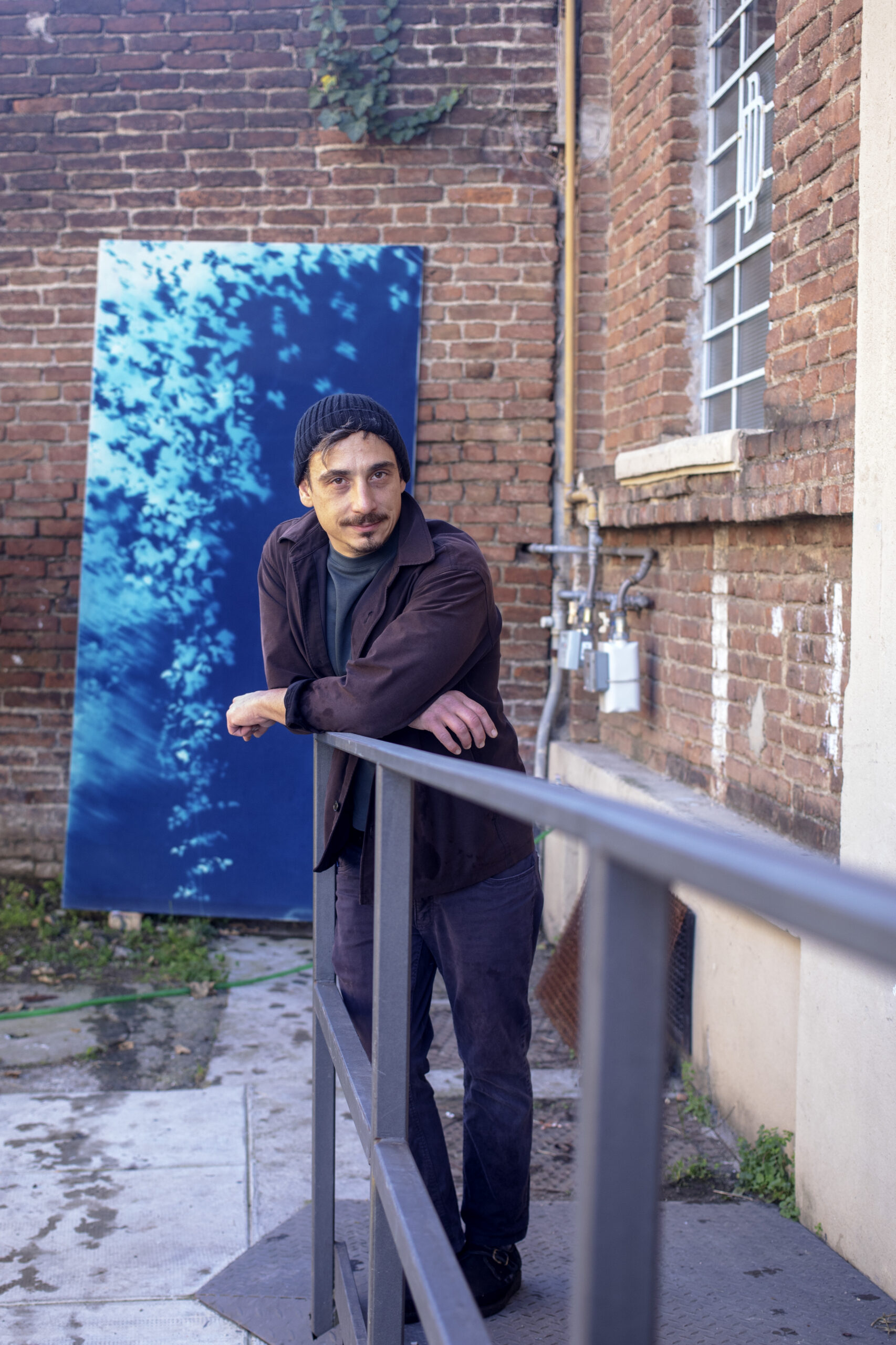 Created by Italian artist Marco De Sanctis, now based in Brussels, Secret Garden is made of two huge panels in deep, bright shades of Prussian blue, punctuated by areas of white resembling leaves. He created it using cyanotype, a nineteenth-century process that, in this case, recorded the effect of light passing through the vines outside his studio window. De Sanctis captured not only the illusion of vines, but the fleeting glimpses created when they interrupted light. What emerged, he said, is “something that doesn’t exist.” It is mesmerizing.
He explained, “These shadows were almost invisible, concealed within the narrow space between object and projection. They could not really be observed directly.”
“Instead, I had to imagine them.”
KOMOREBI: DAPPLED LIGHT
Komorebi quickly becomes a metaphor for Venice itself. It’s an impossible, unimaginable city built on water, yet as fragile as it is, it holds some of the world’s most valuable architecture, art, and history. Its vulnerability is ever present; the Acqua Alta of 1966 is still part of the city’s collective memory.
During the Biennale Arte, the city is transformed into something even more than its usual magical self. Venice has always been theatrical, but during the Biennale it leans into the role, not by transforming into something new but by heightening what has always been there. The Venice that people imagine and the Venice that actually exists briefly collapse into the same place.
Everything about Venice feels ephemeral. Perhaps that is why artists have been drawn here for centuries.
LIGHT AND GLASS
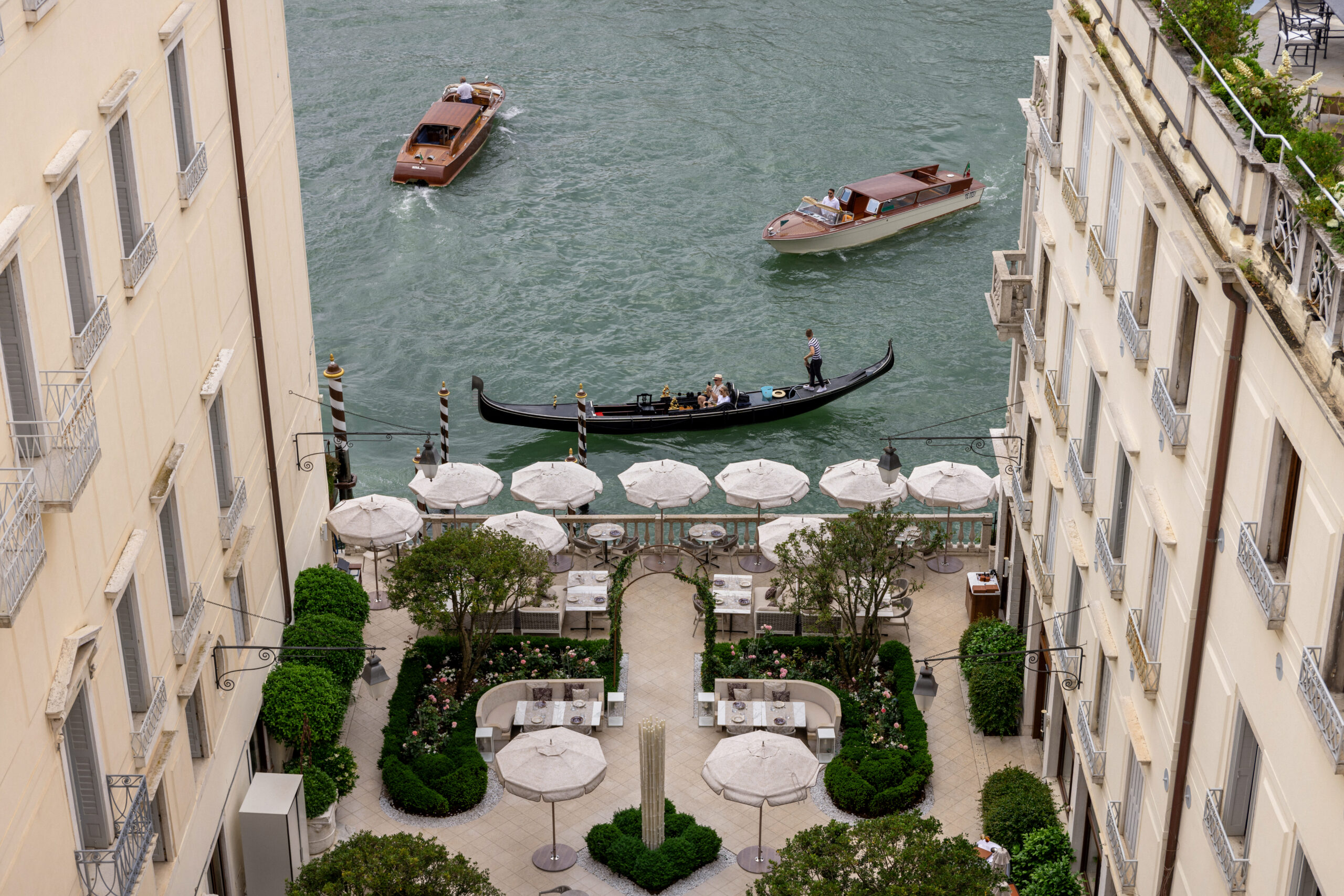
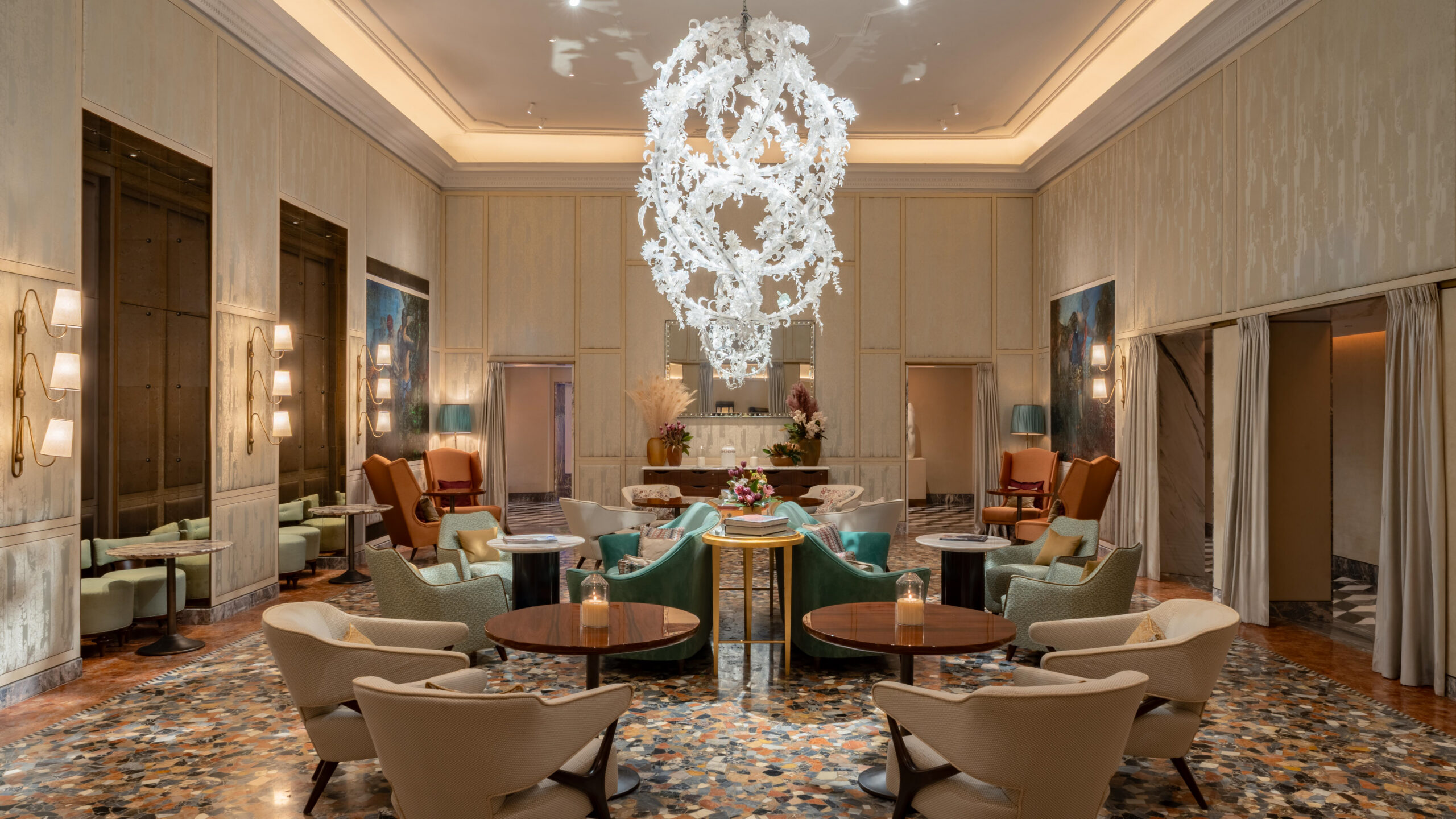 Beyond the Komorebi exhibit, the St. Regis Venice is a spectacular home base for an immersive Biennale experience. Not just because it’s iconic, historic, and on the Grand Canal, but because it is integrated with the art world in a way that intensifies the artistic experience. Take its majestic “White Chandelier” by Ai Weiwei, hanging in the center of its Grand Salon, made of rainbow crystal. It was created as a tribute to Venice’s 1,600-year history.
Before venturing out to explore the city, explore St. Regis itself. The hotel offers a guided tour through the premises, with an explanation of each work in the exhibition. After an hour or so, you’ll have a better understanding of the exhibition’s concept, St. Regis Venice, and the Biennale.
Then take a water taxi or vaporetto to the groundbreaking Berengo Studio, which specializes in Murano glass.
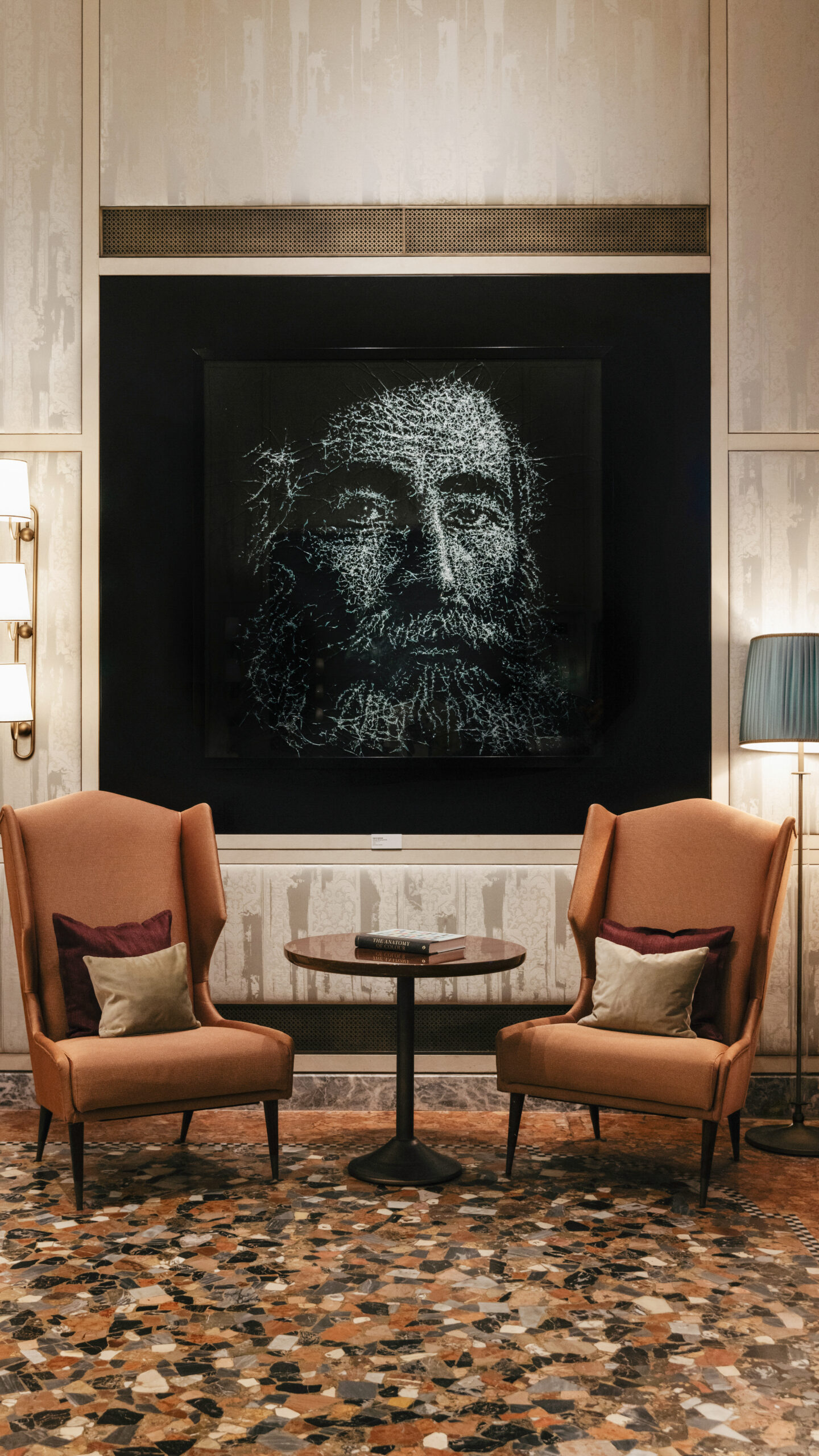 At Berengo Studio, the centuries-old craft of Murano glass continues to evolve. Founded by Adriano Berengo in 1989, the studio revived a collaborative spirit once championed by Peggy Guggenheim and Egidio Costantini, inviting contemporary artists to work alongside Murano’s master artisans. Berengo helped create a renaissance in contemporary art glass. His work transformed glass from craft into an accepted medium of contemporary fine art.
View intricate, avant-garde pieces, some displayed in the middle of a former factory furnace room, smoke-stained windows and all. Watch Murano masters shape molten glass into intricate contemporary works, transforming one of Venice’s oldest traditions into something strikingly modern.
Back at the hotel, experience Murano glass in another form, with an aperitivo at the Grand Canal-facing Arts Bar, which serves inventive cocktails in customized, drink-specific Murano glasses designed by Berengo Studio.
FOLLOWING THE ARTISTS
More than a century ago, Claude Monet arrived in Venice intending to stay only a few weeks. Instead, he extended his visit and became consumed by the city’s shifting light. From his window at the Grand Hotel Britannia, now The St. Regis Venice, he painted repeated views of San Giorgio Maggiore, but instead of focusing on the buildings, he became obsessed with painting the air, water, atmosphere, and light.
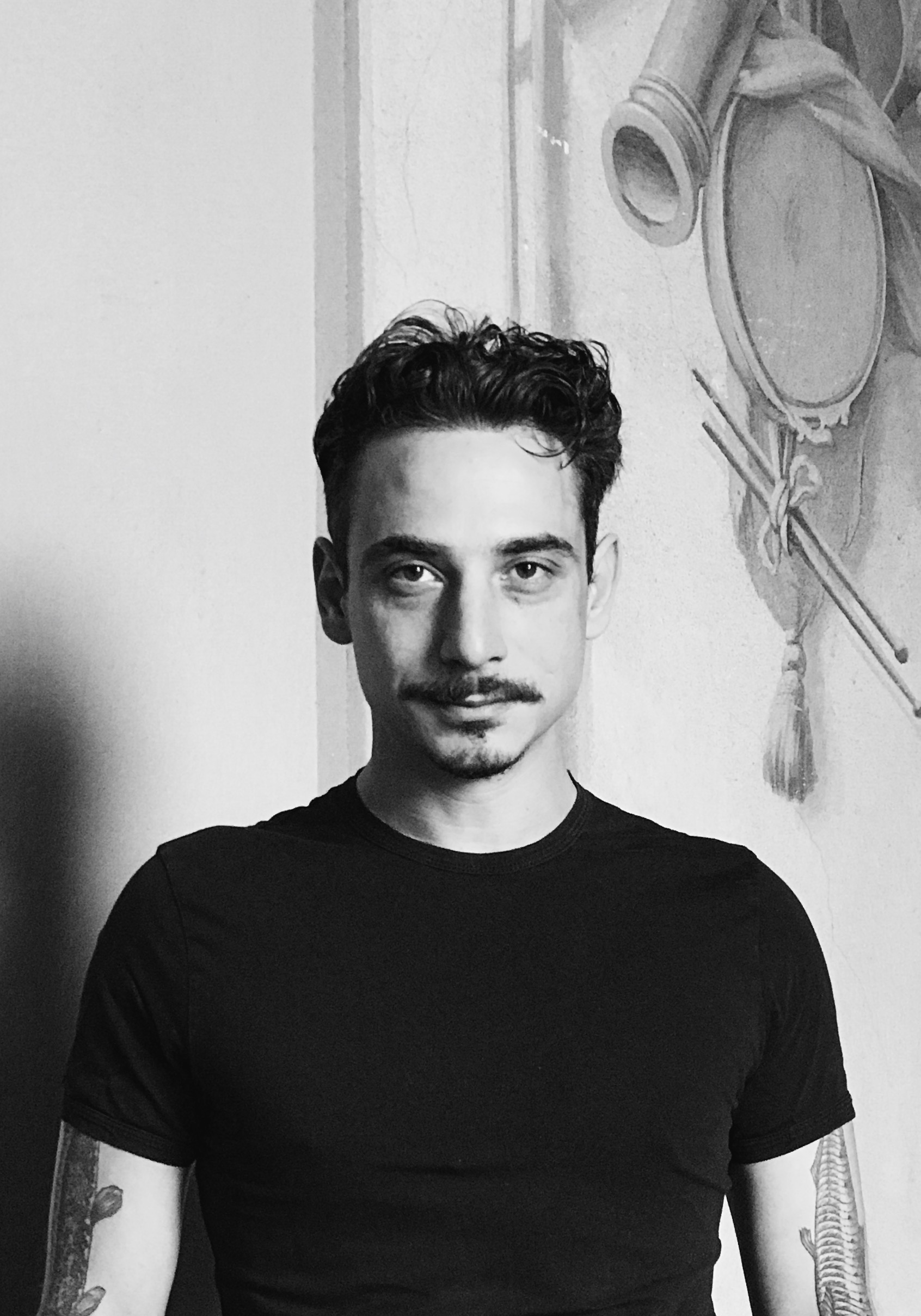
De Sanctis described Monet’s approach in a way that is very Komorebi. “Monet, and the Impressionists more broadly, were deeply concerned with the attempt to capture something fleeting and almost impossible to hold onto: a particular moment, a particular quality of light. In a way, they were also precursors to photography itself. The very notion of an “impression” carries this desire to preserve an instant before it disappears.”
Today, the suites overlooking the Grand Canal and San Giorgio Maggiore are known as The Monet Suites. Inside, large panels painted on canvas by artist Olivier Masmonteil, inspired by Monet’s series, hang on the walls. “With this project, I have focused on light and its abstraction,” Masmonteil shared.
Venturing from the hotel through Venice’s medieval streets and canals is half the Biennale experience. Art spills beyond the historic Giardini and Arsenale sites of the Biennale, appearing in piazzas, along canals, inside churches and palazzos, making the city itself feel like an extension of the exhibition.
Giardini della Biennale, the original site of the Biennale, is in an open-air, parklike setting with permanent national pavilions for exhibitions by 29 countries. A fifteen-minute walk from the Giardini through the Castello district takes you to the Arsenale, the old shipyard for Venetian vessels, one of the largest Renaissance and medieval shipyards in the world. Its size and warehouses allow for larger exhibitions and installations.
VENICE THROUGH ANOTHER MEDIUM
By the time the private water taxi arrives back on St. Regis’ dock and the porters help guide you from sea to land, the hotel’s exquisite restaurant, Gio’s, is waiting. Here, Venice reveals itself through yet another medium: gastronomy.
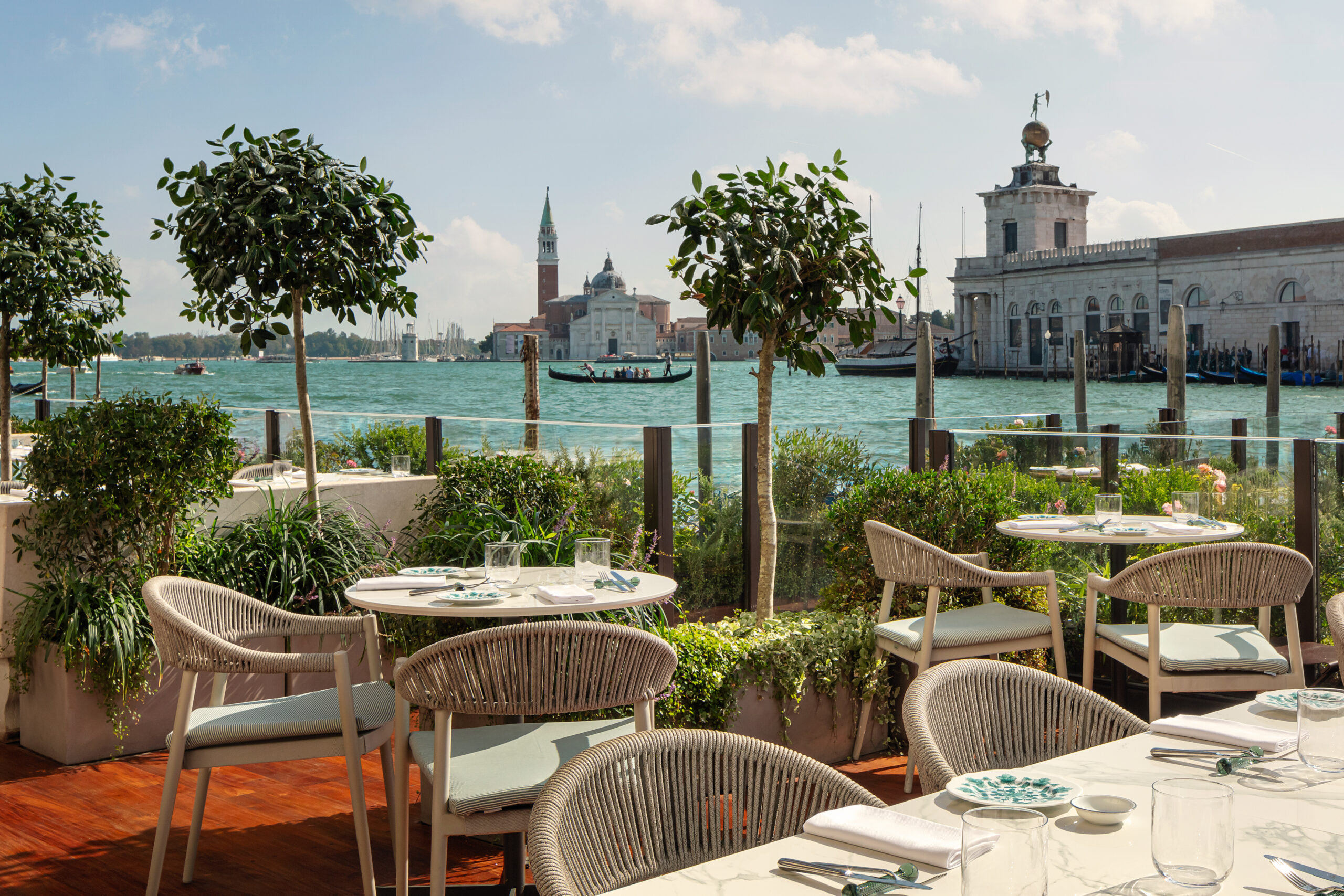 At Gio’s, the cuisine, developed by Puglia-native Executive Chef Giuseppe Ricci, reinforces the city’s larger story. The seafood carries the imprint of the Adriatic, and even the wines seem touched by the sea.
“It’s the same sea,” Ricci explained. Venice sits on the northern Adriatic. Puglia stretches along the southern Adriatic. Different landscapes, different histories, different light—yet connected by the same body of water, and the same instinct toward seafood, olive oil, herbs, and delicacy.
Every course carried the thread of lightness and minerality, like Venice and the lagoon. A petit four of a chocolate sphere with a toasted caper delivered a slight, unexpected burst of salinity that interrupted sweetness—such a delicate, fleeting pleasure.
For travelers, the Biennale experience works best as a slow itinerary: begin with the St. Regis Venice’s own exhibition, continue to Berengo Studio in Murano, devote a day each to the Giardini and Arsenale, then return to the Grand Canal for a cocktail or dinner as light shifts over the water.
It’s a wonderful time to visit Venice. More than a century after Monet painted San Giorgio Maggiore from the windows of what is now the Monet Suites, artists like Marco De Sanctis are still pursuing the same elusive qualities that captivated Monet: light, air, shadows, and impermanence.
Note: The 61st International Art Exhibition, Biennale Arte di Venezia, runs from May 9 to November 22, 2026. Unveiled during the opening week of the Biennale, Komorebi will remain on view at The St. Regis Venice through April 30, 2027.